As an Amazon Associate I earn from qualifying purchases. SnapMart Café is an independent coffee guide. Purchases are completed on Amazon.
BRAND STORIES · WHOLE-BEAN DECAF
Kicking Horse Coffee: the garage story and a guide to Swiss Water Decaf
Elana Rosenfeld and Leo Johnson wanted to build a life in the Canadian Rockies. Their coffee business began in a garage. Here is the documented story, followed by a practical look at the 2.2 lb whole-bean decaf in Snapmart’s catalog.
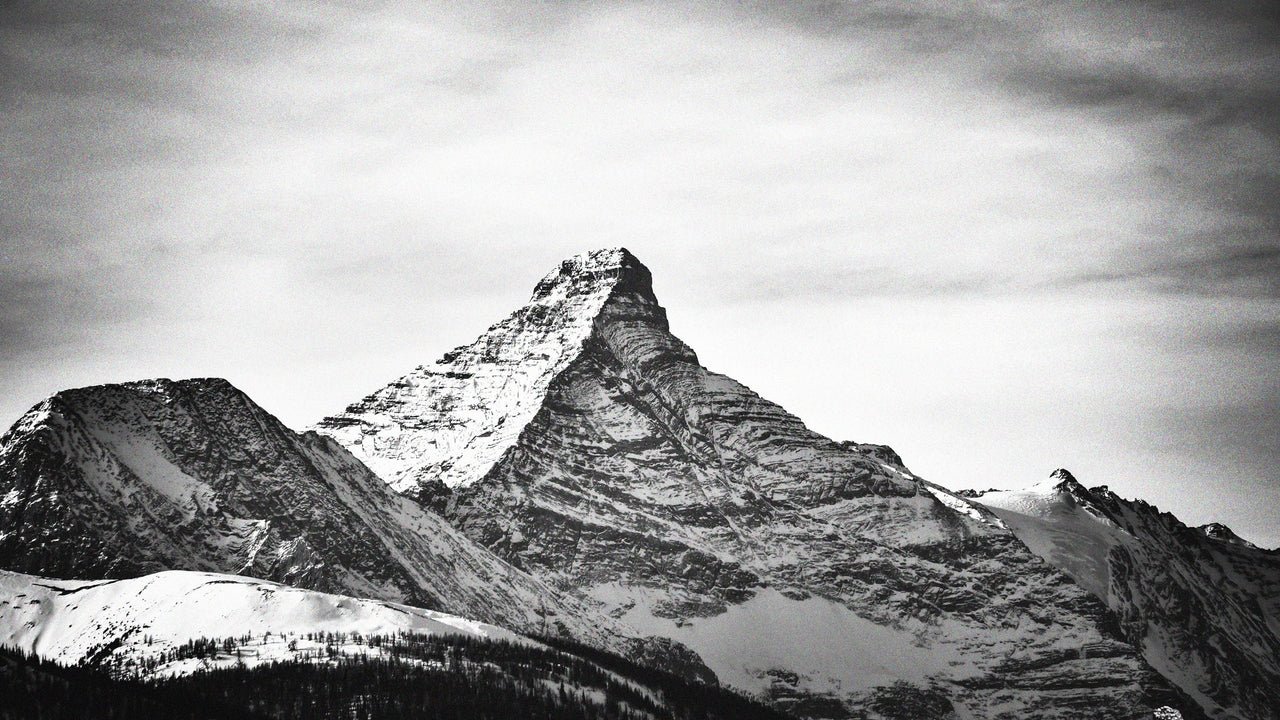
Finding a beautiful place was only the beginning
A place can be easy to fall in love with and difficult to make a living in. The view answers one question: where would you like to stay? It leaves another unanswered: what work could let you remain there?
That tension sits at the beginning of Kicking Horse Coffee. In a WorkBC profile, Elana Rosenfeld describes the route from studying at McGill to starting ventures in Invermere, British Columbia, including a fruit stand and a café. Coffee roasting became the next possibility.
Rosenfeld and Leo Johnson sold their first pound of Kicking Horse Coffee in August 1996, according to that account. Before a recognizable black bag could travel to someone else’s kitchen, two people had to find a way to make a small mountain business work.
For a reader, that is a more useful starting point than a list of awards. It makes the brand’s location part of a human decision. The mountains were a place to build a working life, with the ordinary demands that follow any decision to sell something people will return to buy.
The first roasting room did not need a grand address
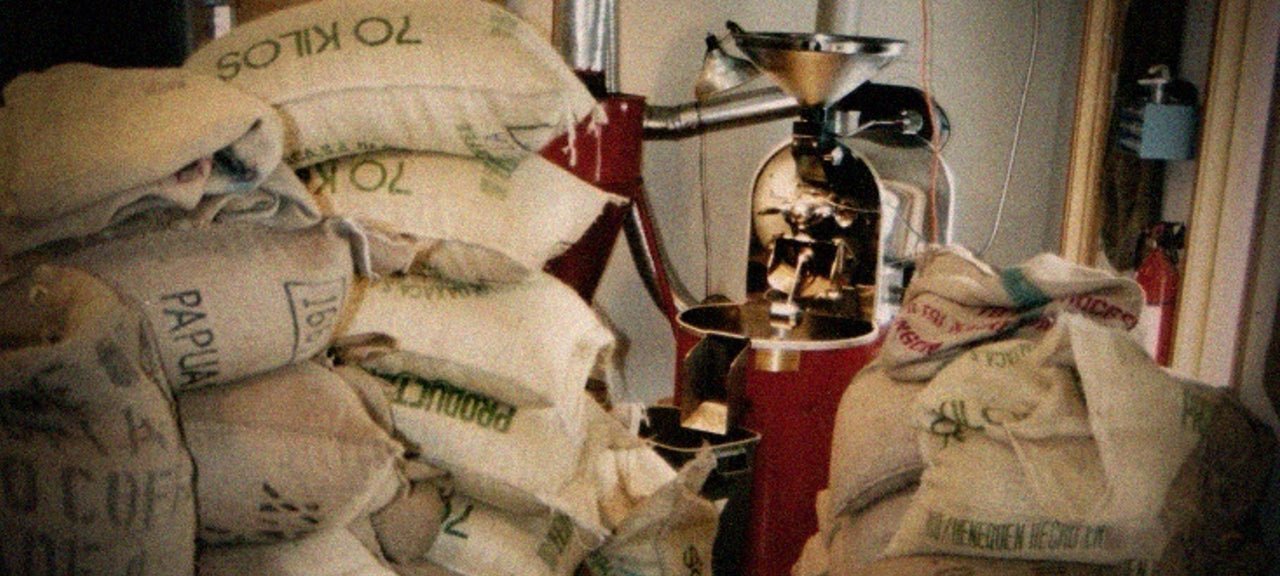
The company’s own history places its beginning in a garage in the Canadian Rockies. The photograph above gives that word scale: sacks occupy much of the room and a compact roaster sits between them. There is little distance between stored material and the machine doing the work.
A garage origin is easy to turn into a business fable. The more interesting point is the work it contains. Buying green coffee and roasting it creates a different responsibility from simply reselling a finished bag. A promise about flavor has to become a process someone can repeat.
The official account also connects that beginning to its present mountain setting. Location provides continuity, but it should not be mistaken for agricultural origin. Roasted in Canada does not mean grown in Canada. A package can tell you where roasting happens and separately identify where its coffee was cultivated.
The values on a bag need something behind them
Organic and Fairtrade are central to the way Kicking Horse presents its coffee. Its supply-chain report describes purchasing from certified cooperatives and identifies certification as part of its sourcing approach.
Those words give a shopper specific things to check. Look at the certification marks on the selected product, read the manufacturer’s explanation and distinguish that information from a general feeling that a package looks natural. A mountain photograph cannot do the work of a certification.
The human background adds another layer. A 2018 McGill interview with Rosenfeld connects her appreciation of cafés to student life and describes the business she built with Johnson. It also records the company’s connection with Lavazza following the 2017 investment.
The business grew beyond its founders’ first workspace. A Lavazza Group anniversary announcement in October 2026 marked thirty years since the 1996 start. That gives the story a dated milestone without treating old staff counts or rankings as current facts.
The horse belongs to the legend
The brand tells a story about an explorer struck by a horse, companions who thought he had died and a remarkable cup of coffee that revived him. Its own page introduces this as a legend. That is how it should be read here too.
A memorable name can make a package easy to recognize. It does not establish caffeine strength, brewing performance or a medical effect. In particular, the word “Kicking” is no reason to assume every blend contains an unusually large amount of caffeine.
That distinction matters for the product linked below: it is decaffeinated. The playful identity remains, while the practical question changes from the force of a name to whether a particular bag suits the coffee you want to make.
The bag to look for: Decaf, whole bean, 2.2 lb
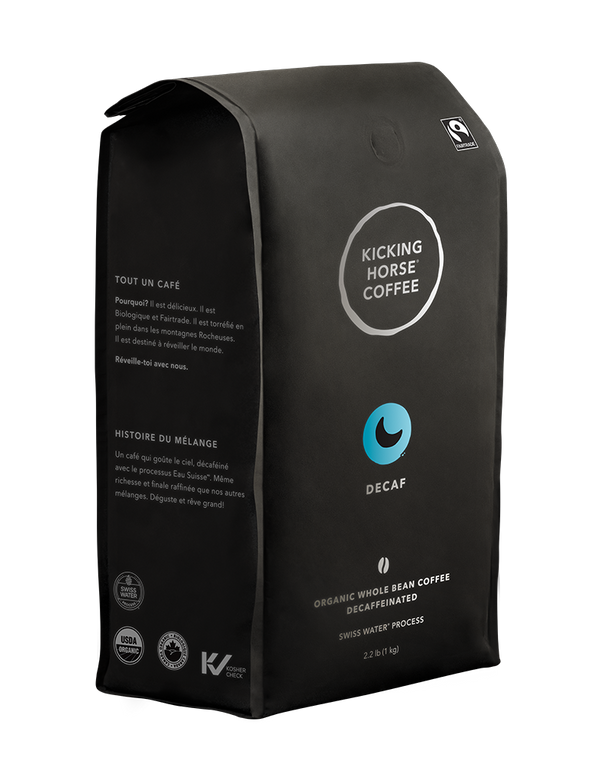
Snapmart’s existing entry is Kicking Horse Coffee Decaf Swiss Water Process, whole bean, 2.2 lb. The manufacturer’s Decaf page lists organic Arabica coffee, describes chocolate and roasted-hazelnut references, and recommends several brewing methods. These are the brand’s descriptions, not tasting results from Snapmart.
The photographed bag helps identify format and quantity. It is whole bean and displays 2.2 lb alongside 1 kg. That is a rounded unit conversion on the package, not two separate sizes being offered in this article.
Other names in the range, including Kick Ass and Three Sisters, refer to other blends. This article’s purchase buttons all identify Decaf and retain the existing Amazon destination. Do not substitute another blend merely because its bag carries the same brand.
Swiss Water answers a different question from whole bean
The manufacturer’s FAQ identifies Swiss Water as the decaffeination process used for Decaf. Its explanation centers on water, temperature and time. The process description concerns removing caffeine; it does not mean you can skip grinding or brewing.
Keep four details separate when comparing: brand, blend, caffeine category and physical format. “Decaf” identifies the caffeine category. “Whole bean” tells you what arrives in the bag. “Swiss Water” identifies a process. The weight tells you how much coffee you are considering.
Do not read decaffeinated as a guarantee of precisely zero caffeine in your finished cup. This guide provides no laboratory measurement for your bag or recipe. It also makes no promise that changing coffee will solve sleep or digestive problems.
A large bag needs a place in your actual routine
This presentation is worth exploring if you want whole-bean decaf and already have a suitable grinder or a machine designed to grind coffee. It is less convenient if your only equipment takes capsules or if you want to scoop ready-ground coffee straight into a filter.
Before buying, ask one practical question: will you use a large whole-bean bag often enough to make the extra grinding step welcome? A product that fits your habits is easier to enjoy consistently.
Quantity deserves the same attention as blend. Think about how often you brew, whether someone else shares the bag and how you will store it after opening. We do not assign a guaranteed freshness period or calculate savings from an unverified price.
If you are comparing decafs, our San Francisco Bay Coffee story introduces two different whole-bean options. Compare the named product, amount and manufacturer’s profile rather than assuming all decaffeinated coffee is interchangeable.
Give the grinder a role in the story
Whole beans leave one step in your hands. Grind for the equipment you own and follow its instructions. The same bag does not require the same grind setting for every method, and it cannot be used as a capsule without the appropriate compatible system.
For your first preparation, use a recipe you can repeat. Measure coffee and water where the method allows, then change one variable at a time if you want to adjust the next cup. A simple note about the result can be more helpful than changing several settings at once.
If espresso is your method, start with our home espresso guide. For equipment choices, explore coffee machines at Snapmart. Check the machine’s guidance before assuming that a particular bean or roast is suitable for its grinder.
The mountain story ends at your kitchen counter
Rosenfeld and Johnson’s beginning connects a place they wanted to live with work they could build there. Your decision is smaller: whether this particular decaf, in this format and quantity, deserves a place beside your grinder.
Ready to explore it? See Kicking Horse Decaf at Snapmart, then check the selected bag on Amazon. Purchase and payment take place on Amazon. Confirm seller, current price, availability, shipping and returns there.
The mountains do not come out of the package. The beans do. You measure a portion, turn on the grinder and give a story that began in someone else’s workspace a small place in your own morning.
Sources and related reading
- WorkBC: Elana Rosenfeld’s path into coffee manufacturing.
- Kicking Horse: official history, legend and historical images.
- McGill News: interview with Rosenfeld, January 2018.
- Official Decaf product description and package photograph.
- Manufacturer’s process and product FAQ.
Continue with Mayorga Decaf Cubano or all coffee stories.
Documented history and buying guidance. No personal tasting, invented ratings or medical promises. Product descriptions are attributed to the manufacturer.